


Understanding Reverse Osmosis Water Filtration: A Complete Guide for Australians (2025)
Last updated: March 2025 — Reviewed for Australian water conditions and product availability.
📋 Table of Contents
- What Is Reverse Osmosis?
- How a Reverse Osmosis System Works (Step-by-Step)
- What Contaminants Does RO Water Filtration Remove?
- Types of RO Systems for Australian Homes
- Our Top 3 RO Systems Available in Australia
- Full Specs Comparison Table
- Pros and Cons of Reverse Osmosis
- Installation & Maintenance Overview
- Frequently Asked Questions
- Final Verdict & Our Recommendation
Our Top 3 RO Systems Available in Australia
Before we dive into the full guide, here are our top-rated reverse osmosis systems you can buy right now in Australia:
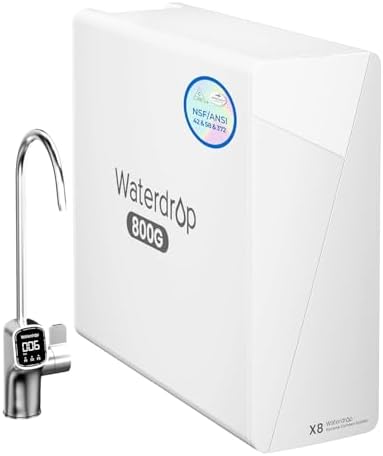
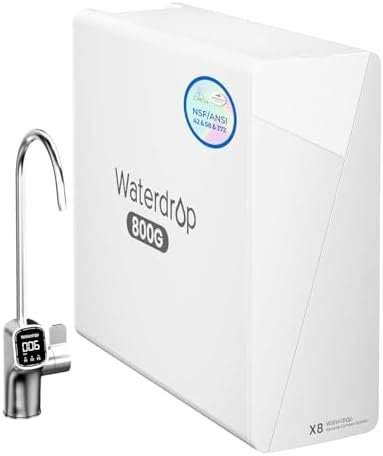
Waterdrop WD-X8 9-Stage Under-Sink RO System

Geekpure 6-Stage Alkaline RO System (75 GPD)

Waterdrop G3P800 Tankless RO System (800 GPD)
What Is Reverse Osmosis?
Reverse osmosis (RO) is a water purification technology that uses pressure to force water molecules through a semi-permeable membrane, leaving behind dissolved contaminants, heavy metals, salts, bacteria, and other impurities. The result is exceptionally clean, great-tasting drinking water.
The term “reverse” refers to the direction of flow. In natural osmosis, water moves from a low-concentration solution to a high-concentration one. Reverse osmosis does the opposite — it applies external pressure to push water from the contaminated, high-concentration side through the membrane to the clean, low-concentration side.
With pore sizes as small as 0.0001 microns, RO membranes are effective at capturing particles that standard carbon or sediment filters simply cannot remove, including fluoride, nitrates, arsenic, PFAS (forever chemicals), pharmaceutical residues, and microplastics.
In Australia, where water quality varies significantly between cities, regions, and even seasons, reverse osmosis systems have become an increasingly popular solution for households seeking the highest level of water purity at home.
How a Reverse Osmosis System Works (Step-by-Step)
Modern under-sink RO systems use a multi-stage filtration process. Each stage targets a different type of contaminant, working together to produce water that is purer than most bottled water brands.
Traps visible particles such as rust, dirt, sand, and silt. This protects the more delicate downstream filters from clogging prematurely. Typically rated at 5 microns.
Removes chlorine, chloramines, volatile organic compounds (VOCs), and chemicals that cause bad taste and odour. This stage also protects the RO membrane, which is highly sensitive to chlorine degradation.
A second pass through activated carbon provides extra protection for the RO membrane and further reduces chemical contaminants.
The core of the system. Water is pressurised through a semi-permeable membrane with 0.0001-micron pores. Up to 99% of dissolved solids, heavy metals, fluoride, nitrates, bacteria, and PFAS are rejected and sent to drain as wastewater. Only pure water molecules pass through.
Removes any remaining tastes or odours that may have been picked up in the storage tank, delivering crisp, clean-tasting water at the faucet.
Some systems add a final stage that reintroduces healthy minerals like calcium and magnesium, raising the water’s pH to 7.5–8.5 for a more natural, mineral-balanced taste.
Premium systems like the Waterdrop WD-X8 add further stages including UV sterilisation and additional carbon polishing, pushing the total to 9 stages and achieving even higher purity levels.
Waterdrop WD-X8 — 9-Stage Under-Sink RO
NSF 42, 58 & 372 certified. Removes PFAS, lead, chloride, arsenic & TDS. 800 GPD tankless design.
What Contaminants Does RO Water Filtration Remove?
One of the key reasons Australians are investing in reverse osmosis systems is the technology’s unmatched ability to remove a wide spectrum of contaminants. Here is what a quality RO system eliminates:
- PFAS (Per- and Polyfluoroalkyl Substances): Often called “forever chemicals,” PFAS have been detected in water supplies across many parts of Australia, particularly near defence bases and industrial areas. RO removes PFAS by up to 99%.
- Fluoride: Added to municipal water supplies across Australia for dental health, fluoride is not harmful at regulated levels — but some households prefer to remove it. RO removes 85–95% of fluoride.
- Lead & Heavy Metals: Old plumbing and infrastructure can leach lead, copper, and other heavy metals into drinking water. RO removes 95–98% of lead.
- Arsenic: Found naturally in groundwater in parts of Australia, arsenic is a known carcinogen. RO systems can reduce arsenic by up to 99%.
- Nitrates & Nitrites: Common in agricultural areas due to fertiliser runoff. RO removes 83–92% of nitrates.
- Chlorine & Chloramines: Used to disinfect tap water, these chemicals cause the typical “pool water” taste and smell. Removed in the pre-filter stages.
- Total Dissolved Solids (TDS): Includes dissolved minerals, salts, and metals. RO consistently reduces TDS by 90–99%.
- Bacteria & Viruses: The RO membrane’s extremely small pore size physically blocks bacteria (0.1–10 microns) and many viruses.
- Microplastics: Increasingly found in tap water globally, microplastics are effectively blocked by the RO membrane.
What RO does NOT remove: Dissolved gases like hydrogen sulphide or radon, and some pesticides with very low molecular weight. A good carbon pre-filter addresses most of these limitations.
Types of RO Systems for Australian Homes
1. Under-Sink RO Systems (Most Popular)
Installed beneath the kitchen sink, these systems connect to the cold-water supply and deliver filtered water through a dedicated faucet on the benchtop. They typically include a storage tank (traditional) or operate tankless (modern). Under-sink systems offer the highest flow rates and filtration capacity, making them the best choice for families.
2. Countertop / Benchtop RO Systems
No installation required — these compact units sit on the benchtop and connect to the tap. Ideal for renters or those who don’t want to modify their plumbing. Flow rates are generally lower than under-sink systems, but modern countertop RO units like the Waterdrop N1 are surprisingly capable.
3. Whole-House RO Systems
These commercial-grade systems treat all water entering the home. Significantly more expensive (AU$2,000–$10,000+) and typically require professional installation. Rarely necessary for most households where purified drinking water is the primary goal.
4. Tankless vs Tanked RO Systems
Traditional RO systems store purified water in a pressurised tank (usually 8–12 litres), which means you always have water ready but the tank takes up under-sink space. Modern tankless systems like the Waterdrop WD-X8 and G3P800 produce water on demand at high flow rates (800 GPD), eliminating the need for a bulky storage tank.
In-Depth Product Reviews
1. Waterdrop WD-X8 — Best Overall Under-Sink RO System
The Waterdrop WD-X8 is one of the most capable home RO systems currently available in Australia. Its 9-stage filtration process delivers NSF/ANSI 42, 58, and 372 certified performance, with a 800-gallon-per-day capacity that means you’ll never wait for filtered water.
The tankless design saves significant space under the sink — no bulky pressure tank cluttering your cabinet. The intelligent faucet features an LED display showing real-time TDS levels and filter life, so you always know when to change the filters.
The WD-X8 is particularly effective at reducing PFAS (per- and polyfluoroalkyl substances), a growing concern in many Australian water catchment areas. It also targets chloride, lead, arsenic, and all major dissolved solids.
✅ Pros
- 9 filtration stages including PFAS removal
- NSF/ANSI 42, 58 & 372 certified
- Tankless — space-saving design
- 800 GPD high flow rate
- Smart LED faucet with TDS display
- Long-lasting filters (12–24 months)
❌ Cons
- Higher upfront cost (~AU$899)
- Requires power outlet under sink
- Professional installation recommended
👉 View Waterdrop WD-X8 on Amazon AU — or — View on eBay AU
Geekpure 6-Stage Alkaline RO System
Removes 99% of contaminants. Alkaline remineralisation filter raises pH to 7.5–8.5. 2.8-gallon tank included.
2. Geekpure 6-Stage Alkaline RO System — Best Value
For Australians seeking excellent filtration performance without a premium price tag, the Geekpure 6-Stage Alkaline Reverse Osmosis System is hard to beat at around AU$240. It delivers everything a standard 5-stage RO system does, plus an additional alkaline remineralisation stage that reintroduces essential minerals and raises the water pH to a healthy 7.5–8.5.
The system produces 75 gallons per day (roughly 285 litres) and comes with a 2.8-gallon (10.6-litre) storage tank, providing ample water for a typical household. Installation is DIY-friendly with quick-connect fittings and clear instructions.
The Geekpure reduces contaminants including arsenic, lead, fluoride, mercury, nitrates, and TDS by up to 99%, meeting NSF/ANSI standards for performance.
✅ Pros
- Excellent value for money (~AU$240)
- 6-stage including alkaline remineralisation
- Balanced pH 7.5–8.5 water
- Includes 2.8-gallon storage tank
- DIY installation with quick-connect fittings
- Removes 99% of common contaminants
❌ Cons
- Lower flow rate (75 GPD)
- Bulkier under-sink footprint (has tank)
- No smart/LED monitoring features
👉 View Geekpure 6-Stage on Amazon AU — or — View on eBay AU
3. Waterdrop G3P800 — Premium Tankless with Smart Faucet
The Waterdrop G3P800 sits between the WD-X8 and the value segment, offering a 800-GPD tankless design with an elegant smart faucet. Its 3:1 pure-to-drain ratio is impressive — it wastes significantly less water than older RO systems, which were notorious for sending 3–4 litres of wastewater down the drain for every litre of purified water produced.
The G3P800 is a favourite among Australian households who want a sleek, modern under-sink solution that doesn’t sacrifice performance. The LED faucet glows different colours depending on water quality and filter status, making maintenance intuitive.
✅ Pros
- 800 GPD — never run out of filtered water
- 3:1 pure-to-drain ratio (water efficient)
- Elegant smart LED faucet
- Tankless — no bulky storage tank
- Compact under-sink footprint
❌ Cons
- Mid-to-high price range (~AU$650–750)
- Requires electricity to operate
- Replacement filters can be expensive
👉 View Waterdrop G3P800 on Amazon AU — or — View on eBay AU
Full Specs Comparison Table
| Feature | Waterdrop WD-X8 | Geekpure 6-Stage | Waterdrop G3P800 |
|---|---|---|---|
| Price (AU) | ~$899 | ~$240 | ~$650–750 |
| Filtration Stages | 9 stages | 6 stages | 7 stages |
| Flow Rate | 800 GPD | 75 GPD | 800 GPD |
| Design | Tankless | With tank (2.8 gal) | Tankless |
| Drain Ratio | ~2:1 | ~3:1 | 3:1 |
| NSF Certified | ✔ Yes (42, 58, 372) | ✔ Yes | ✔ Yes (42, 53, 58, 372) |
| PFAS Removal | ✔ Yes | ✔ Yes | ✔ Yes |
| Alkaline/Remineralisation | ✘ No | ✔ Yes | ✘ No |
| Smart LED Faucet | ✔ Yes | ✘ No | ✔ Yes |
| Requires Electricity | Yes | No | Yes |
| Filter Life | 12–24 months | 6–12 months | 12–24 months |
| Best For | Maximum purity, large households | Budget-conscious buyers | Water efficiency + smart features |
Pros and Cons of Reverse Osmosis Water Filtration
Reverse osmosis is an exceptional technology, but it’s not without trade-offs. Here’s an honest look at both sides:
✅ Advantages of RO
- Removes 95–99% of dissolved contaminants
- Eliminates PFAS, fluoride, lead, arsenic & nitrates
- Better-tasting water than tap or basic filters
- Cost-effective vs bottled water long-term
- Modern systems are compact and easy to maintain
- Reduces plastic bottle waste
- Works with Australian municipal and bore water
❌ Disadvantages of RO
- Wastes some water (though modern systems are improving)
- Removes beneficial minerals (fixable with remineralisation filter)
- Slower flow rate on traditional tank-based systems
- Higher upfront cost than basic pitcher filters
- Requires filter replacements (annual cost AU$50–$150)
- Needs some plumbing knowledge to install
Installation & Maintenance Overview
Installation
Most under-sink RO systems are designed for DIY installation and come with all necessary fittings, tubing, and hardware. The typical installation process involves:
- Turning off the cold-water supply under the sink
- Installing the feed-water adapter on the cold-water supply line
- Connecting the drain line to the sink’s drain pipe
- Drilling a hole in the sink (or benchtop) for the dedicated faucet
- Connecting all filter stages in sequence using the supplied push-fit connectors
- For tankless systems requiring electricity, connecting to a power outlet
Most installations take 1–2 hours. If you’re not comfortable with basic plumbing, a local plumber can typically install an under-sink RO system for AU$100–$200 in labour.
Maintenance
Maintenance is straightforward. Filters need to be replaced on a schedule — typically every 6–12 months for pre/post filters, and every 2–3 years for the RO membrane. Most modern systems include a TDS meter or filter-life indicator so you know exactly when to change them.
Annual filter replacement costs typically range from AU$50–$150, making RO far more economical than buying bottled water over the long term. For a household spending AU$30+ per month on bottled water, an RO system typically pays for itself within 12–18 months.
Frequently Asked Questions
Final Verdict & Our Recommendation
Reverse osmosis water filtration remains the gold standard for home water purification in 2025. Whether you’re concerned about PFAS contamination, fluoride levels, heavy metals, or simply want water that tastes better than tap, an RO system delivers measurable, certifiable results.
For most Australian households, we recommend the following based on budget and priorities:
| Need | Best Pick | Price |
|---|---|---|
| 🏆 Best Overall (Maximum purity + smart features) | Waterdrop WD-X8 9-Stage | ~AU$899 |
| 💰 Best Value (Budget-conscious, great performance) | Geekpure 6-Stage Alkaline RO | ~AU$240 |
| 🌊 Most Water-Efficient (Low waste, smart faucet) | Waterdrop G3P800 | ~AU$650–750 |
If budget is a primary concern, the Geekpure 6-Stage at around AU$240 delivers exceptional value and even includes an alkaline remineralisation stage. For those who want the best technology money can buy — with NSF certifications, PFAS reduction, and smart features — the Waterdrop WD-X8 is our top recommendation.
🛒 Where to Buy: Quick Links
