


Halo 5 Water Conditioner vs Standard Softener: Which Is Right for You?
Australia’s hard water regions — from Perth to Brisbane — wreak havoc on pipes, appliances, and skin. Two competing solutions dominate the market: the HALO 5 five-stage water conditioner and the traditional ion-exchange water softener. One is salt-free and eco-conscious; the other is proven technology for extreme hardness. This guide cuts through the marketing noise so you can make the right call for your home.
Quick-Pick Products Available in Australia
Based on our research, here are the best available products in Australia representing each technology type. Scroll down for full reviews.

Salt-free, whole-house filtration + conditioning. Tackles chlorine, bacteria, viruses & scale without salt or chemicals. Covers up to 1,000,000 gallons.
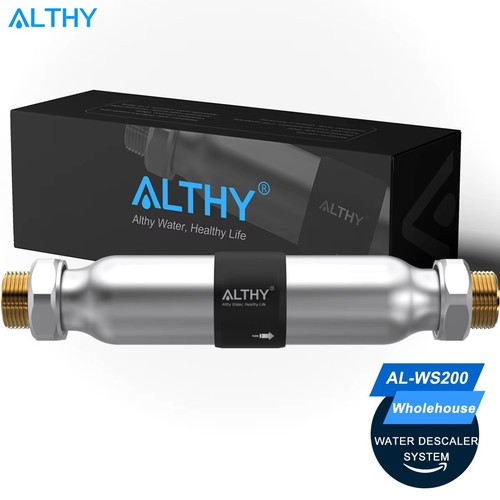
Compact inline salt-free descaler using TAC/IPS technology. Prevents scale limescale buildup in pipes and appliances. Easy DIY installation, no salt, no waste water.
What Is the HALO 5 System?
The HALO 5 is a whole-house water treatment system developed by HALO Water Systems in the United States. It operates through a sophisticated five-stage process that combines sediment filtration, carbon filtration, and an innovative inline water conditioner (the HALO ION 2.0 Plus) — all without any salt, chemicals, or electricity.
The 5 Stages Explained
- Stage 1 — High-capacity depth filter media: Removes sediment, silt, and particulates down to 25 microns.
- Stage 2 — KDF-55 media: Reduces chlorine, heavy metals (lead, mercury, iron), and controls bacteria and algae growth using a redox reaction.
- Stage 3 — High-activity catalytic carbon: Targets chloramines (an increasingly common disinfectant in Australian municipal water) and a wide range of organic compounds including volatile organic compounds (VOCs).
- Stage 4 — Premium coconut shell carbon: Further polishes taste and odour, reducing chlorine down to undetectable levels.
- Stage 5 — HALO ION 2.0 Plus inline conditioner: Uses proprietary template-assisted crystallisation (TAC) media to convert dissolved calcium and magnesium into harmless micro-crystals that pass through pipes without adhering to surfaces — effectively preventing scale without removing the minerals.
Key HALO 5 Specs
- Flow rate: 7–15 GPM (suitable for 1–5 bathroom homes depending on model)
- Tank size: 10″ × 54″ (standard residential)
- Warranty: 10 years on tanks, lifetime on valves
- Maintenance: Backwash every 7 days (automated); no salt required
- Installation cost (US): ~USD $1,800–$2,500 (system + professional install)
- Australian equivalent cost: ~AU $3,000–$5,500 installed via authorised dealers
What Is a Standard Water Softener?
A traditional ion-exchange water softener is the gold standard for eliminating water hardness. It works by passing hard water through a tank filled with negatively charged resin beads. Calcium (Ca²⁺) and magnesium (Mg²⁺) ions — the minerals that cause hardness — are drawn to the beads and exchanged for sodium (Na⁺) ions. The result: genuinely soft water with hardness readings of 0–1 GPG (grains per gallon).
How Ion Exchange Works
- Hard water enters the brine/resin tank
- Ca²⁺ and Mg²⁺ ions bind to resin beads, displacing Na⁺ ions into the water
- Softened water exits for household use
- When resin is saturated (every 1–3 days), the system runs a regeneration cycle: highly concentrated brine flushes the resin, releasing the trapped hardness minerals and recharging the beads with sodium
- Waste brine is discharged to the drain
Standard Softener Specs (Typical Residential Unit)
- Grain capacity: 24,000–48,000 grains (most Australian homes need 30,000–40,000)
- Regeneration frequency: Every 1–7 days depending on hardness and usage
- Salt consumption: 3–8 kg per regeneration cycle
- Annual salt cost: AU $150–$350 depending on water hardness and family size
- Unit cost (Australia): AU $800–$2,500 installed
- Resin lifespan: 8–15 years before replacement
- Does NOT filter: Chlorine, chloramines, bacteria, or other contaminants
Head-to-Head Specs Comparison
| Feature | HALO 5 / Salt-Free Conditioner | Standard Ion-Exchange Softener |
|---|---|---|
| Technology | Template Assisted Crystallisation (TAC) + Carbon Filtration | Ion Exchange (Na⁺ replaces Ca²⁺/Mg²⁺) |
| Removes hardness minerals? | ✗ Transforms them into harmless crystals | ✓ Completely removes Ca²⁺ and Mg²⁺ |
| Filters contaminants? | ✓ Chlorine, chloramines, VOCs, sediment, bacteria, viruses (HALO 5) | ✗ Does not filter — hardness only |
| Salt required? | ✓ No salt ever | ✗ Requires ongoing salt purchase |
| Ongoing running cost | ~$0/year (periodic media replacement every 6–10 years) | AU $150–$350/year in salt |
| Adds sodium to water? | ✓ No sodium added | ✗ Adds 100–350 mg/L of sodium |
| Wastewater produced? | Minimal (clean backwash water only) | 30–200 L of salt-laden brine per regeneration |
| Suitable for garden/pets? | ✓ Backwash safe for irrigation | ✗ Brine harmful to plants and soil |
| Effective for very hard water (>20 GPG)? | Partial — reduces scale but may not achieve 0 GPG | ✓ Guarantees near-zero hardness |
| Electricity required? | Minimal (backwash timer) or none | Yes (control valve timer) |
| Maintenance | Very low — backwash only | Regular salt refills + annual service |
| Upfront AU cost | AU $900–$5,500 (varies by brand) | AU $800–$2,500 installed |
| Warranty (typical) | 5–10 years | 3–7 years |
| Environmental impact | Low — eco-friendly | High — brine discharge harms waterways |
| Preserves healthy minerals? | ✓ Yes — calcium and magnesium remain | ✗ Removes all minerals |
Best HALO 5 Alternative Available in Australia: Aquasana EQ-1000-AST-UV
If you’re drawn to the HALO 5 system but want something readily available in Australia, the Aquasana EQ-1000-AST-UV is the closest equivalent you’ll find on the Australian market. It’s a multi-stage whole-house system combining carbon filtration, KDF media, UV purification, and Aquasana’s proprietary Scale Control Media (SCM) — which functions like the HALO ION stage to neutralise hardness minerals without salt.
What the Aquasana EQ-1000 Covers
Rated for up to 1,000,000 gallons (roughly 6–10 years for a typical Australian family), the EQ-1000 handles sediment, chlorine (up to 97%), chloramines, bacteria (99.99%), viruses (99.99%), heavy metals, cysts, and scale — making it a comprehensive whole-home water quality solution, not just a hardness treatment.
Scale Control Performance
In independent testing, Aquasana’s SCM technology demonstrated up to 99.6% scale prevention efficiency when used in water with hardness levels below 15 GPG (about 250 mg/L as CaCO₃). For most Australian capital city water supplies — which range from 10–80 mg/L hardness — this is more than adequate. Regional and bore water users with higher hardness may see reduced efficacy.
Installation Notes for Australia
The EQ-1000 ships from the US but is widely available on Amazon AU. Installation requires basic plumbing knowledge or a licensed plumber. The system includes a pre-filter, main tank assembly, UV module, and post-filter in a complete kit. Most Australian plumbers can complete the install in 2–3 hours.
✅ Pros
- No salt or chemicals ever needed
- UV stage kills bacteria and viruses
- 1,000,000 gallon capacity — 6–10 years
- Cost under $0.01 per gallon
- Preserves healthy minerals
- No brine discharge — eco-friendly
- 4-star rating from 559+ reviews
❌ Cons
- Won’t achieve 0 GPG hardness — just inhibits scale
- Not effective above 15 GPG hardness
- Higher upfront cost (~AU $960+)
- Requires professional plumbing installation
- Filters need periodic replacement
Best Budget Salt-Free Option: ALTHY IPS-SAAS Whole House Water Descaler
For renters, apartment dwellers, or homeowners who just want scale prevention without the full commitment of a whole-house system, the ALTHY IPS-SAAS offers an accessible, budget-friendly entry point. It uses Inline Phosphate Scale Inhibitor (IPS) technology — a different approach to TAC but similarly salt-free and chemical-free.
How IPS Technology Works
The ALTHY system releases tiny controlled doses of food-grade polyphosphate into the water stream. This binds to calcium and magnesium ions, preventing them from crystallising into scale deposits on pipes, boilers, and appliances. Unlike TAC, polyphosphate-based systems are consumable — the inhibitor media needs replenishment every 6–12 months depending on water hardness and flow rate.
Where It Fits Best
The ALTHY IPS-SAAS is ideal for protecting your hot water system, dishwasher, washing machine, and shower heads from moderate hard water (5–15 GPG). It’s not a filtration system, so it won’t address chlorine, taste, or bacteria — but as a dedicated scale-prevention device, it delivers strong value for under AU $550.
✅ Pros
- Affordable upfront cost (AU $325–$550)
- No salt, no electricity, no waste water
- Compact inline design — easy installation
- Effective for moderate hardness
- Protects all appliances downstream
- Free delivery on eBay AU
❌ Cons
- Consumable media needs periodic replacement
- Does not filter chlorine, bacteria, or contaminants
- Not rated for very high hardness (>20 GPG)
- Less comprehensive than Aquasana or HALO 5
- Not suited for whole-house filtration
5-Year Cost Analysis: Salt-Free Conditioner vs Standard Softener
One of the most important factors in the HALO 5 vs standard softener debate is long-term cost. Here’s how the numbers compare over a typical 5-year period for an Australian household.
| Cost Item | Salt-Free Conditioner (Aquasana EQ-1000) | Standard Water Softener |
|---|---|---|
| Purchase + installation | AU $960–$1,200 (unit + plumber) | AU $800–$2,000 (unit + plumber) |
| Year 1 running cost | ~$40 (annual service check) | ~$200–$350 (salt) |
| Years 2–5 running cost | ~$160 total (filter changes) | ~$800–$1,400 total (salt) |
| Resin/media replacement (Year 5) | Not needed until Year 6–10 | ~$200–$400 |
| 5-Year Total Cost | ~AU $1,160–$1,400 | ~AU $2,000–$4,150 |
Over five years, a salt-free system like the Aquasana EQ-1000 typically costs 30–60% less to run than a traditional salt-based softener, despite a similar or slightly higher upfront cost. This gap widens in areas with very hard water where softener salt consumption increases significantly.
Who Should Choose Which? A Decision Guide
Choose a HALO 5-Style Salt-Free Conditioner if:
- You want comprehensive water quality, not just hardness treatment. HALO 5 and the Aquasana EQ-1000 filter chlorine, chloramines, heavy metals, bacteria, and viruses — a traditional softener does none of this.
- You’re on a low-sodium diet or have young children. Salt-based softeners can add 100–350 mg/L of sodium to your water, which is a concern for those monitoring sodium intake.
- You care about the environment. Salt-laden brine discharge is banned or restricted in many Australian council areas due to its impact on wastewater treatment and groundwater.
- You want minimal maintenance. No salt bags, no brine tanks, no regular service visits.
- Your water hardness is below 15 GPG (most capital city water is well within this range).
- You want to use your grey water for irrigation. Salt-free backwash is safe for gardens.
Choose a Traditional Ion-Exchange Water Softener if:
- You have extremely hard water (above 20 GPG, common in some rural Queensland, South Australia, and WA bore water areas). Only ion exchange reliably achieves 0 GPG.
- You specifically want the silky-smooth feel of genuinely softened water for bathing and laundry.
- Your dermatologist recommends softened water for eczema, psoriasis, or sensitive skin conditions where true hardness removal matters.
- You have older plumbing with existing scale buildup that needs ongoing maintenance.
- Your budget is tight upfront and you’re prepared to manage ongoing salt costs.
Frequently Asked Questions
Final Verdict: HALO 5 vs Standard Softener
After thoroughly analysing both technologies, the verdict depends entirely on what problem you’re trying to solve:
| Your Priority | HALO 5 / Salt-Free Conditioner | Traditional Softener | Winner |
|---|---|---|---|
| Scale prevention (moderate hardness) | Excellent | Excellent | Tie |
| Scale prevention (very hard water) | Good | Outstanding | Traditional Softener |
| Overall water quality + filtration | Outstanding | Poor (hardness only) | Salt-Free / HALO 5 |
| 5-year running cost | ~$1,200–$1,400 | ~$2,000–$4,150 | Salt-Free / HALO 5 |
| Environmental impact | Very low | High (brine discharge) | Salt-Free / HALO 5 |
| Ease of maintenance | Minimal | Regular (salt refills) | Salt-Free / HALO 5 |
| Soft-water “feel” | Not provided | Classic silky feel | Traditional Softener |
| Safe for sensitive sodium diets | Yes | No | Salt-Free / HALO 5 |
| Available on Amazon/eBay AU | Yes (Aquasana, ALTHY) | Limited | Salt-Free Options |
Our recommendation: For the vast majority of Australian homeowners, a quality salt-free whole-house conditioner and filter like the Aquasana EQ-1000-AST-UV delivers superior value, lower long-term cost, better overall water quality, and a dramatically smaller environmental footprint compared to a traditional ion-exchange softener. The HALO 5 represents the premium end of this category, but its cost and limited Australian availability make alternatives like the Aquasana a more practical choice for most buyers.
The traditional water softener remains the right choice only when water hardness is extreme (above 20 GPG) and you specifically need 0 GPG hardness — such as for medical reasons or highly sensitive industrial applications.
🛒 Shop Our Top Picks
Both products ship to Australia. Click below to check current pricing.
