


pH Water Filter: Understanding Water pH and How to Optimise It (2025)
Updated: April 2025 | Category: Alkaline Filters | Reading time: 14 min
The pH of your drinking water affects everything from taste to mineral content to how your appliances perform. A pH water filter adjusts your water’s acidity or alkalinity while removing contaminants — giving you water that tastes better and has a healthier mineral profile. But what pH should you actually aim for? And which type of filter is right for your situation? This guide explains the science, debunks the myths, and helps you make an informed choice.
What Is Water pH and Why Does It Matter?
pH stands for “potential of hydrogen” and measures how acidic or alkaline a liquid is on a scale from 0 to 14. A pH of 7.0 is neutral (pure water). Below 7 is acidic; above 7 is alkaline. Most tap water falls between 6.5 and 8.5, depending on your local source and treatment.
Why should you care about your water’s pH?
- Taste: Water below pH 6.5 often tastes sour or metallic. Water between pH 7.5 and 9 tastes smoother and more refreshing.
- Mineral content: pH reflects the mineral balance. Lower pH water has fewer alkaline minerals; higher pH water is richer in calcium, magnesium, and potassium.
- Pipe corrosion: Acidic water (below 6.5) corrodes copper and lead plumbing, potentially leaching metals into your supply.
- Appliance longevity: Hard, alkaline water can cause scale buildup; very acidic water corrodes internal components.
How pH Water Filters Work
A pH water filter combines standard contaminant removal with a pH-adjusting stage. The exact method depends on whether your water is too acidic (needs raising) or you simply want to optimise its alkalinity:
Raising pH (Alkalising)
The most common approach. After standard carbon filtration removes chlorine and impurities, water passes through a mineralising stage containing calcite (calcium carbonate), alkaline ceramic beads, maifan stone, or magnesium oxide. These media dissolve slowly, adding calcium, magnesium, and potassium while raising pH to 8.0–9.5. This is particularly useful after reverse osmosis treatment, which strips minerals and leaves water at a low pH of 5.5–6.5.
Neutralising Acidic Water
If your water source is naturally acidic (bore water, rainwater, or certain municipal supplies), a calcite or calcium carbonate neutralising filter raises pH toward neutral 7.0. These are often used as whole-house systems to protect plumbing from corrosion.
Multi-Stage pH Systems
The most thorough approach combines multiple filtration stages:
- Sediment pre-filter — removes rust, sand, and particles
- Activated carbon block — removes chlorine, VOCs, and taste/odour issues
- KDF media (optional) — reduces heavy metals and inhibits bacteria
- Reverse osmosis membrane (optional) — removes up to 99% of dissolved solids
- Alkaline remineralisation — adds minerals back and raises pH to the optimal range
Benefits of pH-Balanced Water
- Noticeably better taste: Water in the pH 7.5–9 range consistently tastes fresher, smoother, and less flat than acidic or demineralised water.
- Essential mineral intake: Calcium and magnesium added during pH adjustment contribute to bone health, muscle function, and cardiovascular well-being.
- Plumbing protection: Raising acidic water to neutral prevents copper and lead leaching from pipes — a genuine health and infrastructure benefit.
- Post-RO improvement: If you use reverse osmosis, a pH filter restores the minerals and taste that the RO membrane removed.
- Reduced plastic waste: Home pH filtration eliminates the need for bottled alkaline water.
- Potential hydration benefits: Some studies suggest mildly alkaline water may improve hydration markers, though more research is needed.
Potential Drawbacks
- Over-hyped health claims: Some manufacturers claim pH water filters cure diseases or dramatically improve health. The evidence for these claims is weak. The real benefits are better taste, mineral content, and pipe protection.
- Not a substitute for proper filtration: Raising pH alone does not remove contaminants. Ensure your system includes adequate carbon, sediment, or RO filtration before the alkalising stage.
- Ongoing filter costs: Alkaline cartridges need replacement every 6–12 months ($30–$80 depending on the system).
- Medication considerations: Very high pH water (above 9.5) may affect absorption of certain medications. Consult your doctor if relevant.
- Diminishing returns above pH 9.5: Water above pH 10 tastes soapy and provides no additional health benefit for drinking.
Types of pH Water Filters
| Type | How It Adjusts pH | Output pH | Price | Best For |
|---|---|---|---|---|
| Alkaline Pitcher/Jug | Mineral cartridge in pour-through jug | pH 8–9.5 | $30–$150 | Budget entry, small households, trying alkaline water |
| Gravity-Fed Benchtop | Multi-stage mineral media + ceramic | pH 8–9 | $50–$200 | Families, renters, zero installation |
| Undersink Alkaline Filter | Carbon + alkaline cartridge under sink | pH 8–9.5 | $150–$400 | Homeowners, clean countertops |
| RO + pH Remineraliser | RO membrane + alkaline post-filter | pH 8–9 | $200–$600 | Maximum purity + pH optimisation |
| Whole-House Calcite Filter | Calcite tank neutralises acidic water | pH 6.5–7.5 | $300–$800 | Acidic bore/well water, plumbing protection |
| 8-Stage Replacement Cartridges | Drop-in cartridge for existing dispensers | pH 8–9 | $15–$50 each | Existing dispenser owners, cost-effective refills |
Buying Guide: What to Look For
1. Know Your Starting pH
Before buying, test your tap water with a pH meter or test strips (under $15). If your water is already pH 7.5–8, you may only need a standard carbon filter for taste improvement. If it is below 7 (acidic), an alkalising filter will make a noticeable difference. If you use reverse osmosis, a pH remineraliser is almost essential to restore minerals and taste.
2. Filtration First, pH Second
The most important job of any water filter is contaminant removal. Make sure your system effectively removes chlorine, sediment, and ideally heavy metals before worrying about pH adjustment. Third-party certifications (NSF, SGS, WaterMark) verify real-world performance.
3. Target pH Range
For everyday drinking, pH 8.0–9.5 is ideal. Filters that claim pH output above 10 are unnecessary for health and will taste unpleasant. A gentle, consistent pH boost is better than an extreme one that varies wildly depending on flow rate.
4. Mineral Content
The best pH filters add a balanced mix of calcium, magnesium, and potassium — not just one mineral. Look for systems that use multiple mineralising media (calcite + alkaline beads + maifan stone) for a more complete mineral profile.
5. Filter Lifespan and Cost
Calculate cost per litre, not just the sticker price. A $30 pitcher cartridge lasting 400L costs 7.5 cents/litre. A $60 benchtop cartridge lasting 5,000L costs 1.2 cents/litre. Larger systems are almost always more economical long-term.
6. Installation and Space
Pitchers and gravity-fed systems need zero installation but take up bench space. Undersink and RO systems are hidden but require plumbing. Match the system to your living situation — renters often prefer portable options.
Our Top 5 Picks for 2025
Here are five pH water filters that deliver real value for different needs and budgets.
| Product | Type | pH Output | Key Feature | Links |
|---|---|---|---|---|
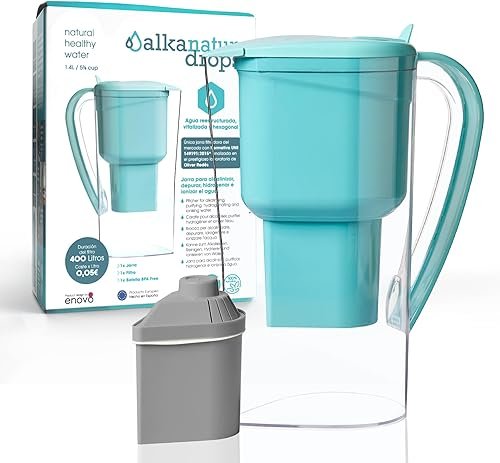
| Alkanatur Pitcher | Pitcher | pH 9.5 | Removes fluoride, PFAs, microplastics | Amazon eBay |
| Aimex 16L 8-Stage Benchtop | Gravity-fed | pH 8–9 | 8-stage, SGS certified, 16L | Amazon eBay |
| 3-Stage Undersink Alkaline | Undersink | pH 8–9.5 | WaterMark certified, silver alkaline tech | Amazon eBay |
| Aimex 8-Stage Cartridges (4-Pack) | Replacement | pH 8–9 | Drop-in for existing dispensers | Amazon eBay |
| Gentoo Glass Alkaline Jug 1.5L | Pitcher | pH 8–8.5 | Hand-blown borosilicate glass, fluoride removal | Amazon eBay |
Brief Reviews
1. Alkanatur Alkaline Hydrogen Water Filter Pitcher

The most capable pH pitcher on the market. Using 100% natural materials — activated coconut carbon, zeolite, and mineral media — it raises pH to 9.5, adds magnesium, and removes fluoride, chlorine, microplastics, PFAs, and lead. No ion exchange resin means no chemical trade-offs. At ~$144 it is premium for a pitcher, but the contaminant removal rivals some undersink systems.
Pros
- Removes fluoride, PFAs, lead, microplastics
- pH 9.5 output
- 100% natural filter materials
- Adds magnesium
Cons
- Higher cost than basic pitchers
- Cartridge replacement every ~400L
- Smaller capacity
2. Aimex 16L Bench Top 8-Stage System

The best all-round gravity-fed pH filter for families. Eight filtration stages include ceramic, activated charcoal, KDF (copper-zinc alloy for heavy metal reduction), alkaline mineral balls, silica sand, and more. The result is thorough contaminant removal with a balanced alkaline pH. SGS-certified quality, BPA-free construction, and a generous 16L capacity make it practical for daily household use.
Pros
- 8-stage comprehensive pH filtration
- SGS certified quality
- 16L family capacity
- Zero installation
Cons
- Slow gravity flow rate
- Plastic housing
- Takes up benchtop space
3. 3-Stage Undersink Alkaline pH Filter

A WaterMark-certified undersink system that delivers pH-optimised water from a dedicated stainless steel tap. The silver alkaline filter provides antibacterial protection while raising pH, and the 0.5-micron coconut carbon block removes chlorine and fine particles. Compact design fits easily under most sinks, and quick-change cartridges swap in seconds without tools.
Pros
- WaterMark certified
- Silver alkaline antibacterial tech
- Hidden under-sink installation
- SUS304 stainless steel tap
Cons
- Requires basic plumbing
- Only 3 filtration stages
- No RO membrane for heavy metals/fluoride
4. Aimex 8-Stage Water Filter Cartridges (4-Pack)

If you already own a compatible benchtop dispenser, these 8-stage replacement cartridges are the most cost-effective way to get pH-balanced water. Each cartridge includes activated charcoal, KDF media, and alkaline mineral components that balance pH while reducing chlorine and heavy metals. The 4-pack provides up to 2 years of filtered water at a fraction of the cost of buying a new system.
Pros
- Excellent value (4-pack)
- 8-stage pH balancing
- Fits most compatible dispensers
- ~6 months per cartridge
Cons
- Requires compatible dispenser
- Not a standalone system
- BPA-free plastic body
5. Gentoo Glass Alkaline Water Filter Jug

A beautifully designed pH water filter for those who want glass over plastic. This hand-blown borosilicate glass jug alkalises water to pH 8.0–8.5 while removing chlorine and fluoride. Completely BPA, BPS, and phthalate-free, it is the healthiest material choice for a pH water filter pitcher. The 1.5L capacity suits individuals or couples, and its elegant design looks great on any countertop.
Pros
- Premium borosilicate glass
- Removes fluoride + chlorine
- Zero toxin risk (no plastic)
- Elegant design
Cons
- Small 1.5L capacity
- Glass is heavier and fragile
- Modest pH boost (8.0–8.5)
Frequently Asked Questions
- What pH should my drinking water be?
- For everyday drinking, pH 7.5–9.5 is the recommended range. This provides a good mineral balance and pleasant taste. Most health authorities consider anything between pH 6.5 and 8.5 safe, but the mildly alkaline range (8–9) is preferred for optimal taste and mineral content.
- Does a regular water filter change pH?
- Standard carbon filters can slightly lower pH by removing some alkaline minerals along with contaminants. Reverse osmosis systems significantly lower pH (to ~5.5–6.5) because they strip virtually all minerals. Only filters with a dedicated alkaline or remineralisation stage actively raise pH.
- How can I test my water’s pH at home?
- Use pH test strips (under $10 for 100+) or a digital pH meter ($15–$30 for a reliable one). Dip the strip or meter in a glass of your water and read the result. Test both your tap water and your filtered water to see the difference your filter makes.
- Is very high pH water (above 10) better?
- No. Water above pH 10 tastes soapy or slippery and provides no additional health benefit for drinking. It can also interfere with medication absorption. The sweet spot is pH 8–9.5. Any filter claiming extreme pH as a selling point is prioritising marketing over science.
- Do pH water filters remove fluoride?
- Most basic pH filters do not remove fluoride. For fluoride removal, you need either a reverse osmosis system with an alkaline post-filter, or a specialist pitcher like the Alkanatur that uses activated coconut carbon and zeolite. Always check the manufacturer’s specific claims and look for third-party test results.
- How often should I replace pH filter cartridges?
- Pitcher cartridges: every 2–4 months or 300–600L. Benchtop gravity cartridges: every 6 months or ~5,000L. Undersink cartridges: every 6–12 months. Replace sooner if flow slows, taste changes, or pH test strips show reduced alkalinity.
Final Thoughts
A pH water filter is one of the simplest and most effective upgrades you can make to your drinking water. Whether your tap water is slightly acidic, you use RO and want to restore minerals, or you simply prefer the taste of mildly alkaline water — there is a pH filter for every budget and situation.
Start by testing your water’s current pH. If it is below 7.5, a pH filter will make an immediate, noticeable difference. If it is already 7.5+, you may benefit more from a standard multi-stage filter focused on contaminant removal. Either way, prioritise filtration quality over extreme pH claims, and choose a system that fits your space, budget, and maintenance preferences.
